Payout compliance that runs itself
The large cash payout is the slowest, riskiest moment in a venue. Ottica AML turns it into a ninety-second, fully documented, privacy-safe compliance record. No forms, no photocopier, no guesswork.
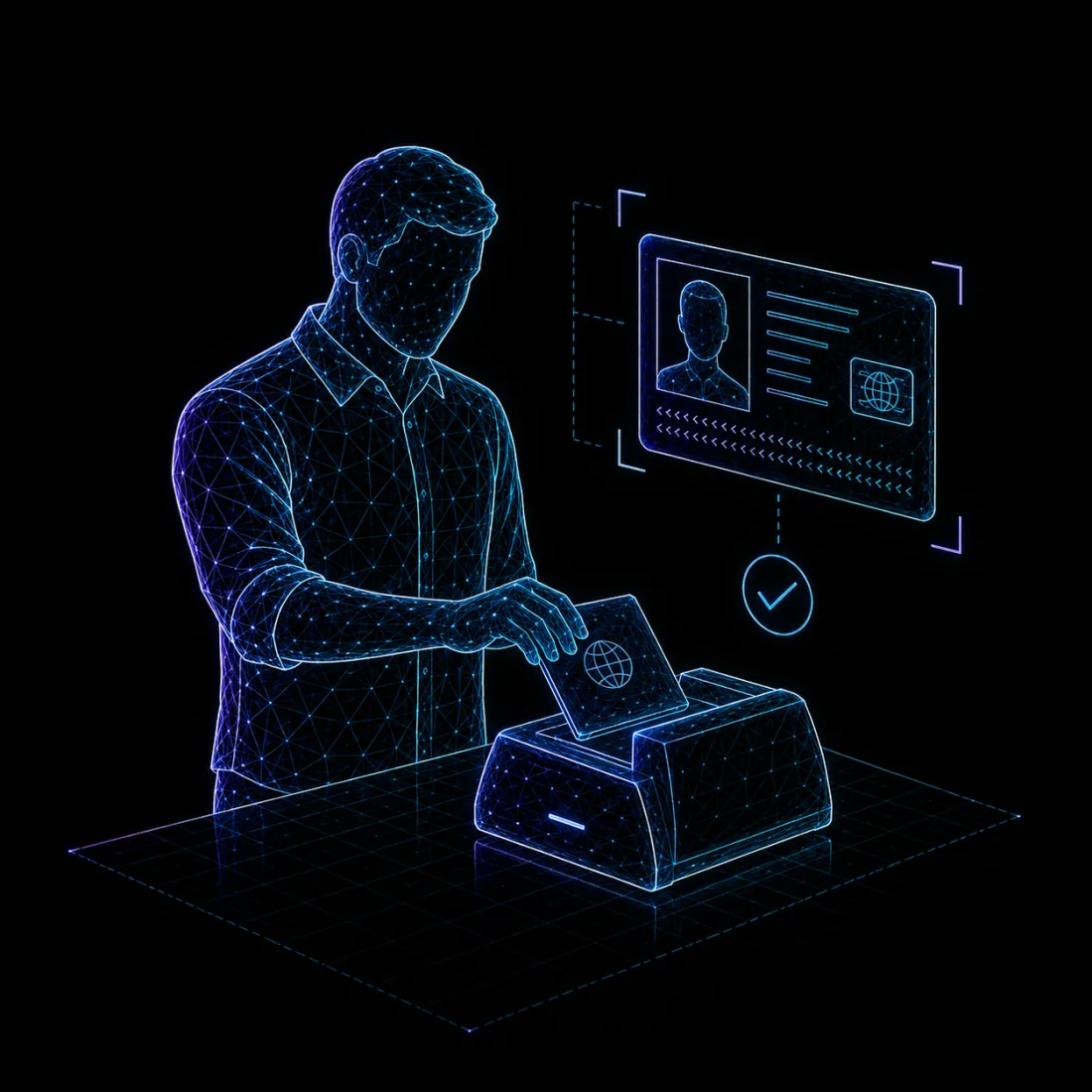
Seven checks. One scan. Ninety seconds.
Every large payout runs the same complete sequence, in the same order, on every shift, and each result lands in the payout record.
The counter today: a checklist and a photocopier.
Venues that pay out winnings must satisfy Australia's anti-money laundering rules: identify the customer, screen them, record the transaction, keep the evidence and be able to show a regulator all of it years later. Most venues still do this with a checklist, a photocopy of a licence, a paper declaration and a manager's memory. It is slow at the counter, inconsistent between staff and a liability in a filing cabinet.
Slow where it hurts most
The customer is standing at the counter while someone hunts for the checklist, photocopies a licence and fills in a form by hand.
Inconsistent between staff
Which documents satisfy identification rules and when a manager needs to sign off, depends on who is on shift and how busy the room is.
A liability in a filing cabinet
Paper records are held too long, secured too little and near-impossible to produce quickly when a regulator asks what happened years ago.
Identification, screening and evidence in one motion
A guided flow at the counter, PEP and sanctions screening in the background and an officer dashboard built for the audit trail.
The tablet reads the card itself
A dedicated scanner captures the document in three lights at once, white, infrared and ultraviolet, front and back, in one motion. The reading happens on the device: name, date of birth, licence number, card number, expiry and address are on screen before the customer has put their wallet away.
Learns new documents without an app update
Every state prints its licence differently. Ottica describes each layout as a small template, pushed from the venue's own server to every tablet as data, so a corrected or brand-new layout reaches the counter in minutes, with a version number on every record and a one-click rollback.
A second pair of eyes, not surveillance
For known documents, the venue's own document service confirms what the tablet read, or flags exactly which field it read differently. Recognised Australian licences and passports never leave the venue by default and the service keeps nothing.
Screening before the money moves
Checks run automatically before the payout is approved: the DFAT Consolidated List and Australian sanctions data, politically exposed persons (PEP) screening and adverse media. Risk rules and thresholds are set per venue on the dashboard, no redeploy.
An officer dashboard built for the audit
Every payout with its documents, screening result, declaration and signature in one record, including the white, infrared and ultraviolet views of each document. A downloadable payout report lists how every field was read, by what and exactly what evidence was held and when it was removed.
Privacy by construction
Full scans exist only until the officer marks the payout reviewed, or thirty days, whichever comes first. The destruction itself is written to the audit log, every view of an image is audited and nothing is ever fed into facial recognition.
What you can expect
- A ninety-second payout flow with nothing to photocopy
- Every payout as one audited record: documents, screening, declaration, signature
- PEP, DFAT sanctions and adverse-media screening before the payout is approved
- Full scans destroyed on review, with the destruction itself logged
- A payout report you can hand a regulator in minutes, years later
- A flow that works offline and syncs when the connection returns
Questions, answered.
Scan: the cashier places the card on the scanner, three lights, front and back, about two seconds. Read: the tablet reads the fields on the device using the layout it has learned for that document. Verify: the venue's document service confirms the read, or points at the one field it disagrees on. Screen: sanctions and adverse-media checks run automatically. Sign: the customer signs the authority on the tablet. Record: the payout, documents, screening and signature become one audited record. Review: an officer reviews it on the dashboard, the full scans are destroyed and the record keeps only what the law needs.
Australian driver licences, including the address on the back and the card number in the same scan, with new layouts learned as data rather than app updates. Passports are read on the tablet too. Multi-person documents such as a family Medicare card are supported with a picker for which person is being identified and a patron can present more than one document, with plain-language guidance on which combinations satisfy identification rules.
Screening runs automatically before the payout is approved: the DFAT Consolidated List and Australian sanctions data, politically exposed persons (PEP) lists and adverse media. Where winnings are paid by transfer, the customer's bank details are captured and verified as part of the flow and where a business is involved, its ABN can be checked against the Australian Business Register (ABR). Every check lands in the payout record with its result.
It captures infrared and ultraviolet views of every document, front and back and shows them to the reviewing officer alongside the white-light scan. Today those views support human judgement; the system does not claim to authenticate documents or detect forgeries.
No vendor can approve your compliance. Ottica AML is built to the AML/CTF identification and record-keeping obligations that apply to venues: it identifies the customer, screens them, records the transaction and keeps the evidence, so you can demonstrate compliance with your program when asked.
A full scan exists only for as long as the compliance check needs it: until the officer marks the payout reviewed, or thirty days, whichever comes first. Then it is destroyed and the destruction is written to the audit log. Only the extracted data and field snippets the law requires are kept, for the statutory seven years. Every view of an image is audited and the whole flow is designed to the Australian Privacy Principles.
No. AML scans are kept out of facial recognition by design: nothing captured in a payout is ever enrolled, matched or fed into it. Ottica AML runs alongside our other venue systems, but it handles identity documents, not faces.
The flow keeps working. Everything the cashier and customer do is queued on the tablet and synced when the connection returns, so a dropout never blocks a payout or loses a record.
See a payout in ninety seconds
Book a demo with our Melbourne team and watch a large cash payout go from ID scan to a complete, audited compliance record, faster than the old checklist could leave the drawer.