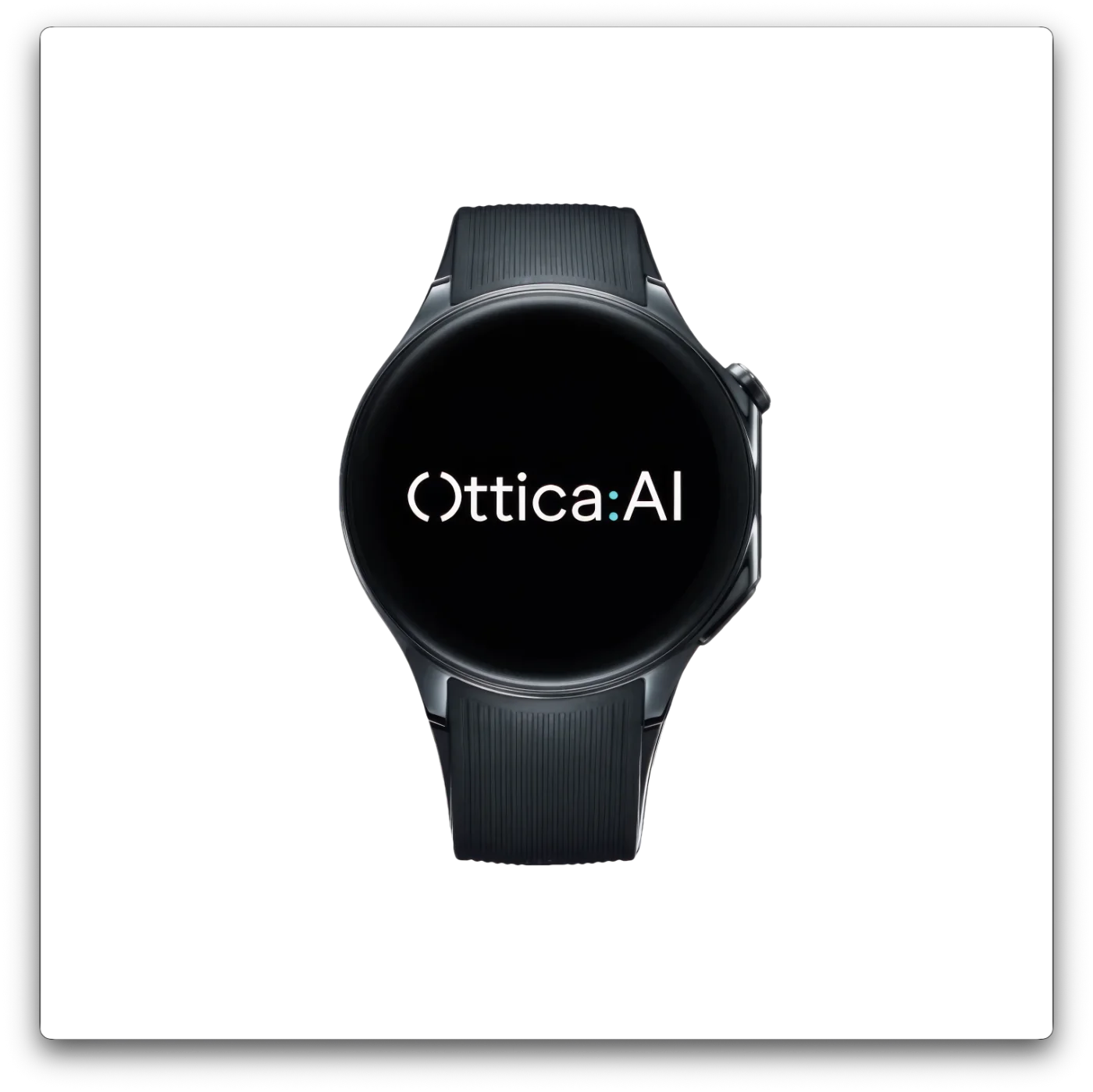
A tap on the wrist: introducing the Ottica smartwatch
Your best people are never at a screen. The Ottica smartwatch puts a match alert on their wrist in under two seconds — who it is, which watchlist, one glance — and it only works inside your venue.
The people who most need to know about a match are the ones least likely to be looking at a screen. The duty manager is on the floor. The security guard is at the other end of the room. The operations lead is anywhere but the office. Until now an alert had to reach a tablet, and then somebody had to reach the tablet.
Today we are introducing the Ottica smartwatch: the same alerts, on your team's wrist, in under two seconds.
Provisioned to one venue, and silent everywhere else.
A tap, then a glance
The watch does not ring, buzz across the room or announce anything to anyone. It taps. A quiet vibration tells a staff member something has happened. One touch of the screen tells them what: who was matched, and which watchlist they are on. That is the entire interaction. No phone out of a pocket, no walking back to a terminal, no conversation across a busy floor about who just walked in.
Discretion is the point. Everyone around that alert — other patrons, and the person themselves — sees a staff member glance at their watch.
The watch in use. Sound on.
Under two seconds, anywhere in the venue
From the moment facial recognition confirms a match, the alert is on the wrist in under two seconds. It works anywhere inside the venue, so the same alert reaches a staff member at the gaming room entrance, the back bar or the car park door.
Two seconds matters because the window for a good outcome is short. A self-excluded patron noticed at the door can be met quietly, early and with care. The same patron noticed twenty minutes later, already seated at a machine, is a harder conversation for everybody in it.
Locked to your venue
The watch is a purpose-built device, not a personal one. It is provisioned to a single venue and receives alerts nowhere else — take it home and it goes quiet. Alerts are end-to-end encrypted in transit, and the watch holds no watchlist of its own. It shows what it is told, when it is told, and nothing is retained on the device.
That matters because a wearable is, by definition, a device that leaves the building. Making sure there is nothing on it worth taking was the first design decision, not the last.
Who it is for
Venue managers, who spend a shift moving between rooms rather than sitting at a desk
Security staff patrolling the floor, who need to know before they arrive rather than after
Duty and operations staff running several areas at once, who cannot watch one screen
The piece that was missing
Facial recognition has been solving the hard half of this problem for years: noticing reliably, at speed, without asking staff to remember faces from a folder behind the bar. The unsolved half was delivery.
An alert that nobody sees is not an alert.
The watch closes that gap. It changes nothing about how matching works or what data is kept — recognition still runs on-premise, still matches only against the lists your venue controls, and still discards everyone else on the spot. What changes is that the right person finds out, wherever they happen to be standing.
Why this matters beyond security
It is easy to read a match alert as a security feature. Most of the time it is not.
The lists that matter most in an Australian gaming venue are self-exclusion lists: people who have made a hard decision about their own gambling and asked to be kept out. Honouring that request depends entirely on somebody noticing in time. The same is true of welfare checks on a long session, and of keeping minors away from machines.
Every one of those is a duty of care discharged by a person, not by a system. The watch simply makes sure that person knows. Faster alerts mean earlier, calmer, more private interventions — better for the patron, better for the staff member having the conversation, and a more demonstrable harm-minimisation program when a regulator asks how your venue actually operates rather than how its policy reads.
Built in Melbourne
The watch was designed and built in-house by our team in Melbourne, alongside the platform it talks to. As far as we know, nobody else in Australia is delivering facial-recognition alerts to a staff member's wrist.
That is not a boast about being first. It is the reason it works properly: because we build the matching, the dashboard and now the watch, an alert never has to cross a vendor boundary on its way to your team.
If you would like to see the watch working on your own floor, we are happy to bring one to your venue.